A local instrument for moving colour
Keep the mood.
Make the marks separate.
Test your generative palette against the proportions and frames it actually lives in. Nothing leaves this browser.
Start a palette study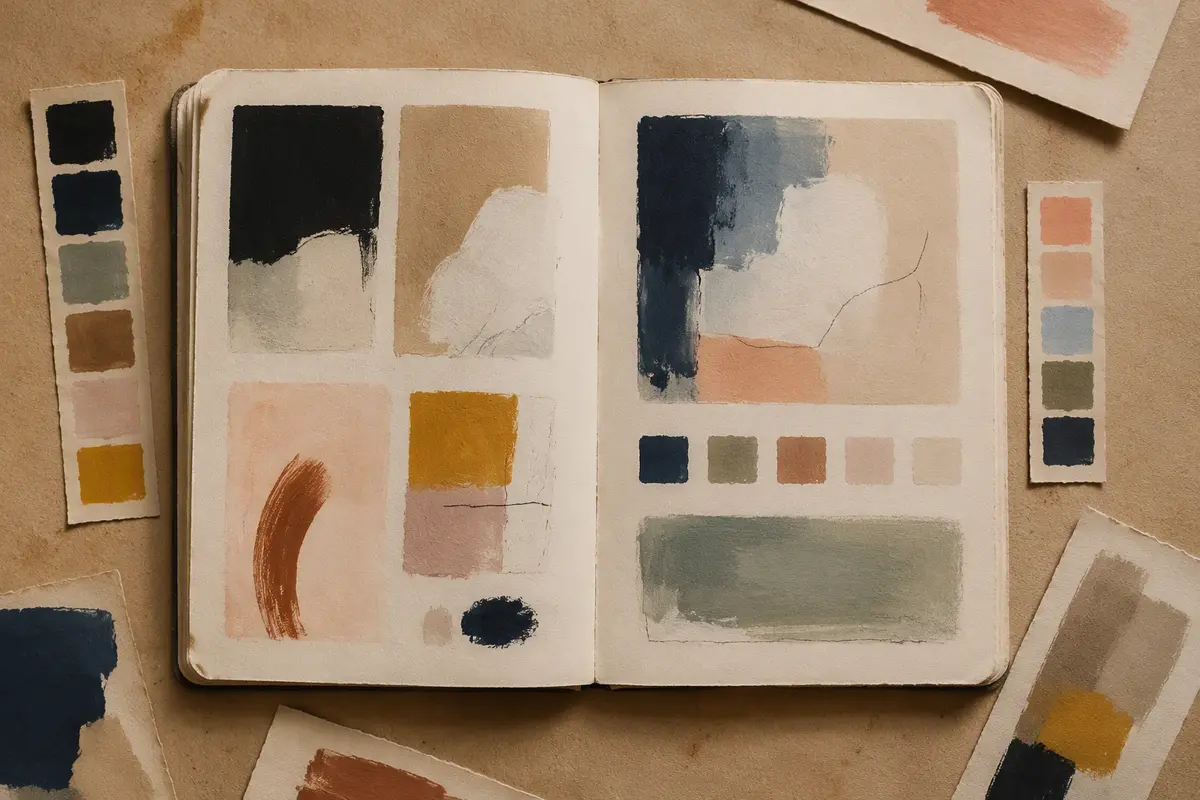
Notebook 01
The palette field test
Add colours, then optionally bring in up to six representative frames. The report estimates where your actual marks become hard to tell apart.
Paint dabs
Name every swatch so findings are meaningful in your sketch.
Sketch frames optional
Use representative moments in the loop, not a single ideal frame. Image pixels are matched to their nearest supplied swatch.
Pair checks work from the swatches alone. Add frames to weight findings by visible area.
Notebook 02
What the eye may merge
Read before publishing
A useful approximation, not a certificate.
Colour vision varies within and beyond named categories. This lab uses simple sRGB matrix approximations for protanopia, deuteranopia, and tritanopia, then compares simulated colour separation and relative luminance. It cannot predict every person’s perception or the effects of context, displays, motion, texture, and size.
Frame weighting assigns image pixels to their closest supplied swatch, so it is most informative when the palette is concise and the frames are representative. Treat flagged pairings as places to inspect, not a universal pass/fail.